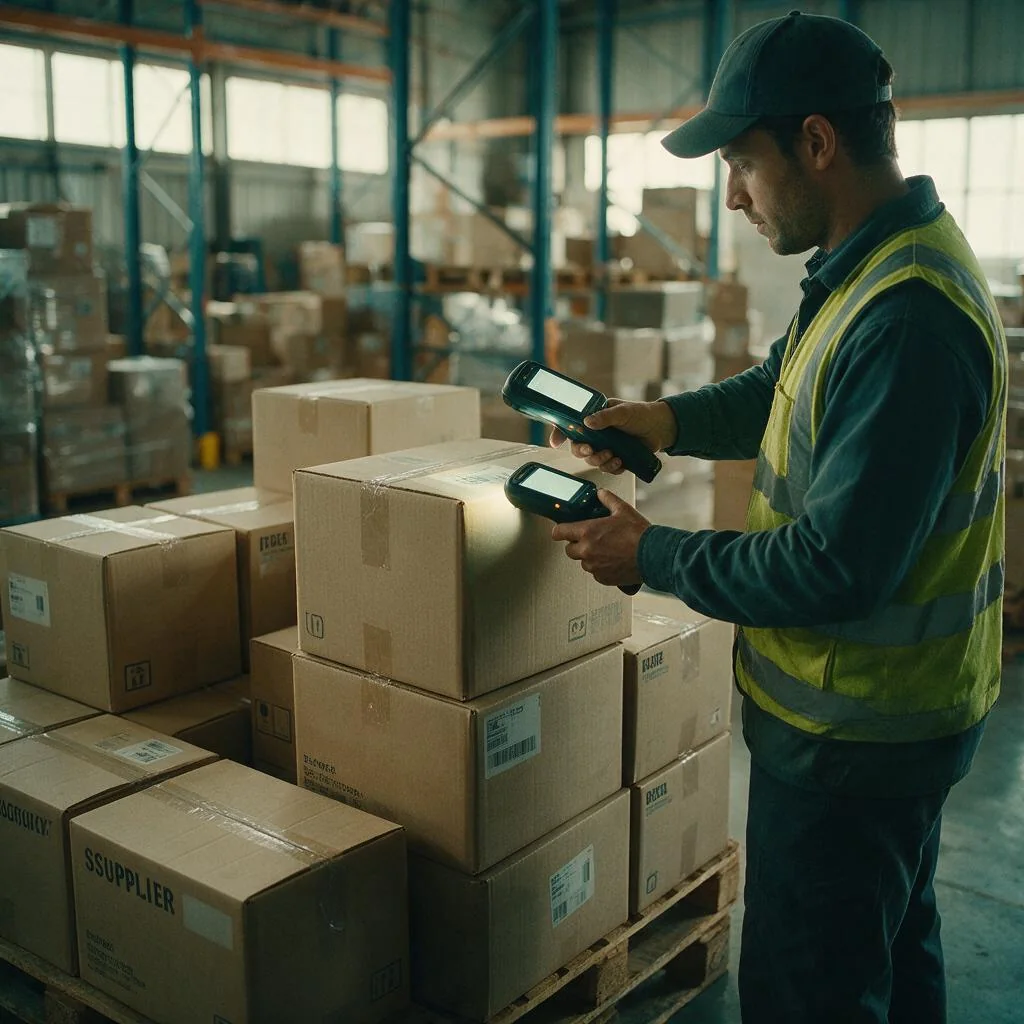
If you buy from three or four factories, the default outcome is three or four shipments, three sets of freight charges and at least one carton that arrives with the wrong label. Consolidation fixes the freight cost and the coordination problem at the same time.
What we coordinate
Collection
Pickup from each supplier, or delivery into our partner warehouse in the export hub.
Receiving check
Carton count, SKU check, damage photos and a discrepancy report within 24 hours.
Re-packing
Retail-ready packs, polybags, labels, inserts, palletisation and stretch-wrap.
Documentation
One commercial invoice and packing list, consolidated for export.
Booking
FCL or LCL booked against the consolidated volume, with a single bill of lading.
Visibility
Photos at receiving and loading, plus a carton-level packing list.
When consolidation pays
As a rule of thumb, LCL becomes inefficient above roughly 15 CBM; at that point an FCL container is usually cheaper and safer. Below 2 CBM, air or express may beat sea once you count the destination charges. We model both before booking, rather than defaulting to the mode we prefer.
| Volume | Usual recommendation | Why |
|---|---|---|
| Under 2 CBM | Air / express | Sea destination charges can exceed the freight saving. |
| 2–15 CBM | LCL consolidation | Shared container, one set of documents. |
| 15 CBM+ | 20ft FCL | Lower unit cost, less handling, faster release. |
| Multiple suppliers | Consolidate first | One shipment, one inspection point, one claim path. |
Last updated 18 November 2026. Figures are indicative and confirmed in writing after scoping.