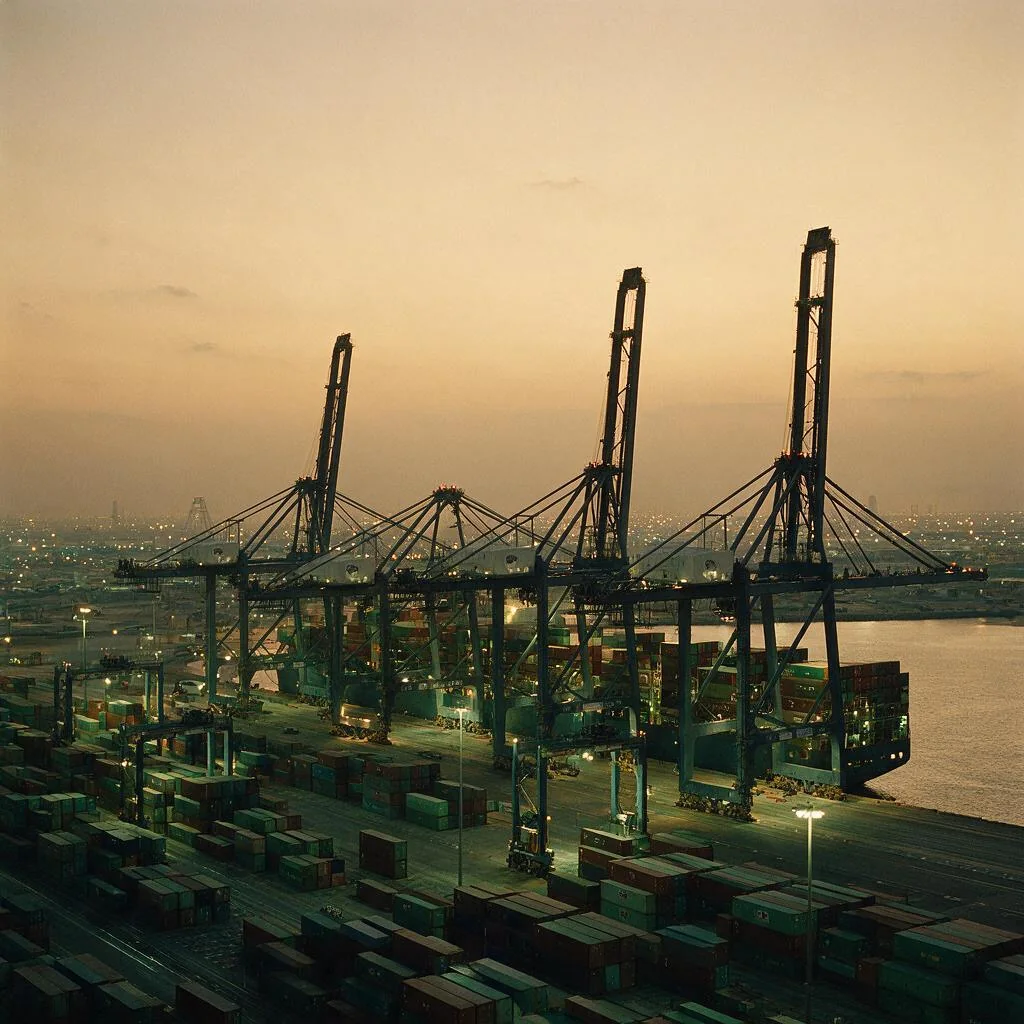
The UAE is a re-export and project market. A buyer in Dubai may be supplying Saudi Arabia, East Africa or Iraq, and the customs status of the goods can change after they leave Jebel Ali. The sourcing plan has to respect that.
What UAE buyers ask us to fix
- A supplier who understands the project specification, not just a catalogue.
- ESMA/ECAS or Dubai Municipality evidence for regulated products.
- Arabic labelling and manuals for consumer-facing goods.
- A Jebel Ali delivery that can move into a free zone or the mainland without a customs surprise.
- 30–180 day terms backed by credit insurance, not just a handshake.
Compliance file we assemble
- ESMA/ECAS certificate or product registration for regulated electrical and consumer products.
- Dubai Municipality food-contact approval where relevant.
- Arabic labels, warnings and instructions for retail and food-contact goods.
- Certificate of origin, commercial invoice and packing list matched to the consignee.
- Free-zone versus mainland customs status confirmed before shipment.
- SASO/Saber documentation where the goods are destined for Saudi Arabia after import.
We do not treat a UAE import as a Saudi import. If the goods will cross the border, the Saudi conformity file needs to be ready before they leave China, not after they reach Jebel Ali.
Logistics
Sea to Jebel Ali is typically 18–25 days from Shanghai, with direct calls and feeder options. Air to Dubai is 1–3 days. For project cargo, we plan heavy lift, site delivery and laydown early; the vessel is usually the easy part.
Last updated 18 November 2026. Figures are indicative and confirmed in writing after scoping.