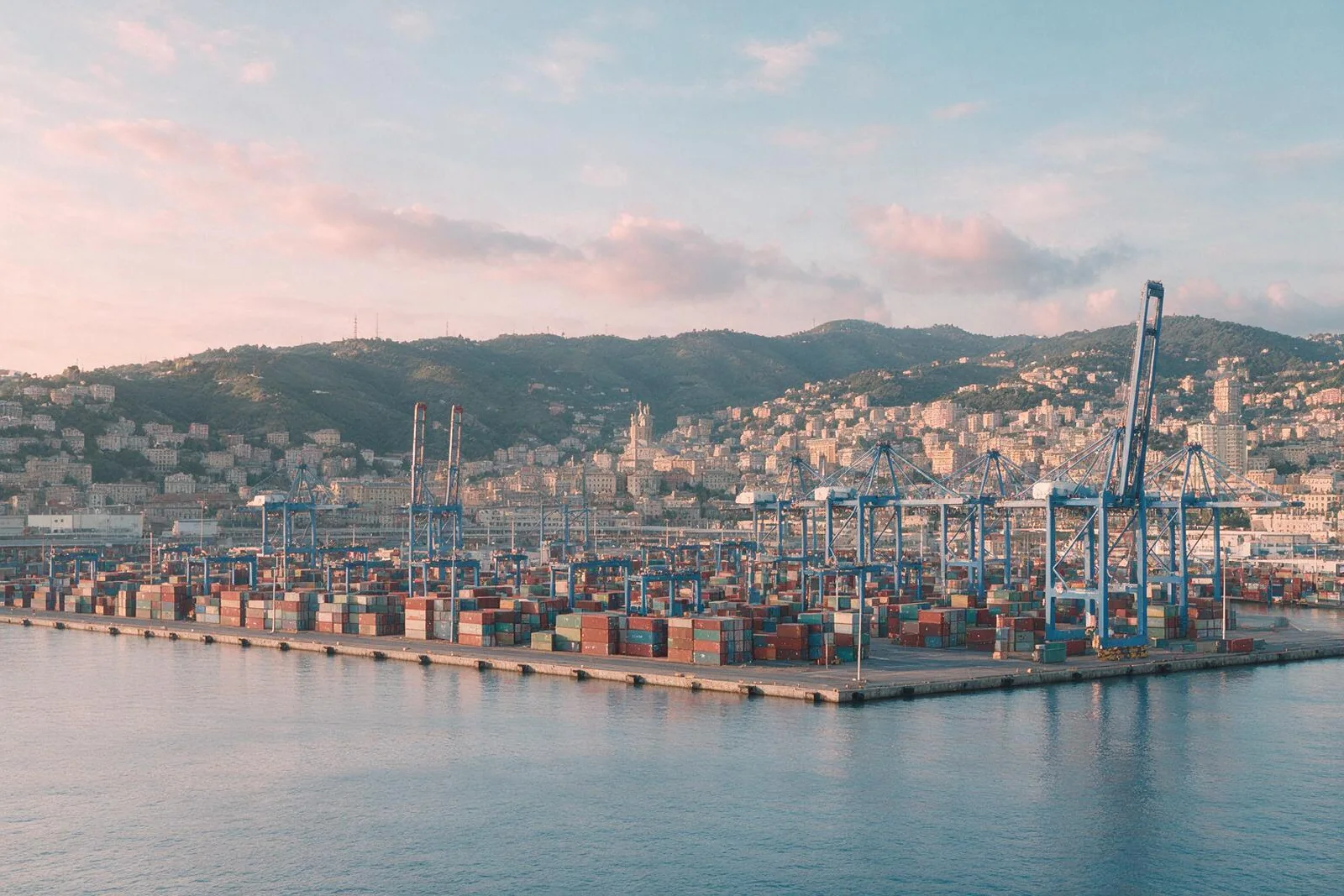
Italy is both a manufacturing economy and a consumer market, and the import file is European before it is Italian. EORI, VAT, CE and packaging EPR come first; then the Italian label, the port and the inland leg. A landed cost that stops at Genoa is not a landed cost.
What Italian buyers ask us to fix
- EORI, VAT and importer details checked before the vessel leaves China.
- CE, GPSR, REACH, RoHS and WEEE files that match the exact model and factory.
- CONAI packaging data and the Italian label, built into production rather than added at the warehouse.
- Genoa, La Spezia or Trieste compared door-to-door, including rail and inland haulage.
- A payment structure that does not tie up cash for the full production and transit cycle.
VAT and the import file
The standard Italian VAT rate is 22%, with reduced rates for specific goods. Import VAT is charged on the customs value plus duty; whether you can defer or recover it depends on your Italian entity and your fiscal adviser. We show VAT as its own line, separate from duty and our fee, so the comparison with your broker is honest.
Conformity, packaging and labels
| Area | What to check before shipment |
|---|---|
| Electrical / electronic | CE marking under LVD/EMC, RoHS, WEEE registration and the correct Italian importer details on the label. |
| Machinery | Machinery Directive and related CE requirements, risk assessment, Italian manual and safety warnings. |
| Packaging | CONAI membership and packaging data for the materials placed on the Italian market; the importer is responsible for the registration. |
| Consumer labels | Italian language for instructions, warnings and importer details where required; food contact and toy rules are separate. |
| Wood packaging | ISPM 15 treatment and marking for crates and pallets. |
Logistics
Genoa is the main gateway for northwest Italy and Milan; La Spezia handles a large share of containers and can be cheaper for Tuscany and Emilia-Romagna; Trieste is the rail gateway for Central and Eastern Europe. Transit from Shanghai or Ningbo is typically 30–35 days. We compare port, rail and truck costs together, not just the ocean freight.
Last updated 18 November 2026. Figures are indicative and confirmed in writing after scoping.